The Darda Rock Splitter is a powerful new product to the Creighton Rock Drill line up. This rock-splitting unit is powered by air, gas, or electricity, but regardless of its power source, the Darda Rock Splitter delivers quick, controlled demolition. We have two models available as well as three choices of power packs. Available for sales and servicing at CRD Mississauga.
Darda Rock Splitter
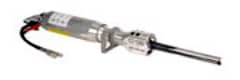
How The Splitter Works
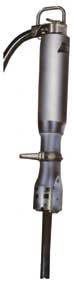
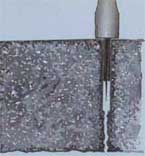
The Hydraulic Splitter Is Powered By A 10,000 P.S.I. Pump. The Cylinder Contains A Control Valve And A Piston That Moves A Plug Between Two Feathers. The Plug And Feather End Is Placed Into A Drilled Hole. The Plug Moves Down Between The Two Feathers Forcing Them Against The Wall Of The Hole. When The Tension Increases Beyond The Tensile Strength Of The Material, A Split Will Occur. The Entire Operation Of The Cylinder Is Controlled By A Single Lever On Top Of The Tool. The Plug Can Be Advanced And Retracted With This Lever. An Automatic Built-In Valve Reduces Pressure After Break.
Darda C2S
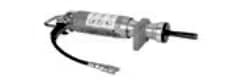
Darda C4E
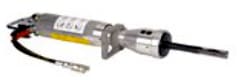
Darda C9
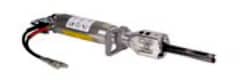
Darda C12
Type
C2S
C4E
C4E
C9
C9
C12
C12
C12
Wedge set
N
N
WL
N
L
N
L
W
Weight (kg)
18
22
23
22
23
31
32
31
Splitting force theoretical (t)
355
461
333
305
305
618
824
494
Splitting force effective (t)
195
230
190
200
200
358
413
321
Drill hole diameter (mm)
32
34 – 36
35 – 38
45 – 48
48 – 50
45 – 48
45 – 48
45 – 48
Drill hole depth (mm)
270
430
540
410
580
610
680
550
Drill hole depth (mm)
140
250
400
230
400
380
450
340
Splitting distance
9
10 – 40
14
18 – 44
18 – 40
20 – 50
15 – 35
24 – 56
Three Types Of Power
Power units are available in three types – air, gas, and electric. Job conditions usually determine the type of power for the hydraulic pump.
AIR – Used in most applications, produces no exhaust gases and not affected by water.
GAS – When all available air is in use for drilling, or when compressor is moved prior to spitting, a gas-powered unit is advantageous.
ELECTRIC – Quiet, no exhaust gases, useful inside buildings, crusher installations, etc.
Controlled Demolition
Controlled Demolition
Hydraulic splitting means controlled demolition. As the direction of breaks can be determined, concrete can be cut in sections as large as your equipment can handle. Hydraulic splitting eliminates both shocks and vibrations associated with large impact tools.
Engineered for heavy duty work, hydraulic splitters will out perform even large mounted impact machines. It can break large pieces of concrete or rock many times faster than with paving breakers. Years of research and the use of hydraulic splitting on hundreds of job sites has proved this new method to be one of the most practical tools for demolition of concrete and rock.
Applications
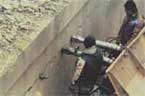
The cylinder’s short size and the excellent ratio between the enormous splitting force and the reduced weight makes this splitter an ideal tool for a variety of demolition jobs such as bridge decks, abutments, retaining walls, concrete walls, tunneling and mining, floor slabs, foundations, wall openings, reinforced concrete, rock and brick walls, locks, dams, culverts, road barriers, and underwater demolition of concrete and rock.
Breaking Vs. Splitting
Paving breakers and large mounted impact rams are for breaking rock or concrete in small pieces. Noisy impact demolition requires more energy, time and is usually more expensive. Using a Splitter, pieces of concrete break in seconds for removal. Working with this method can increase production and reduce costs. With a hydraulic splitter, the operator now has a very powerful tool at his command



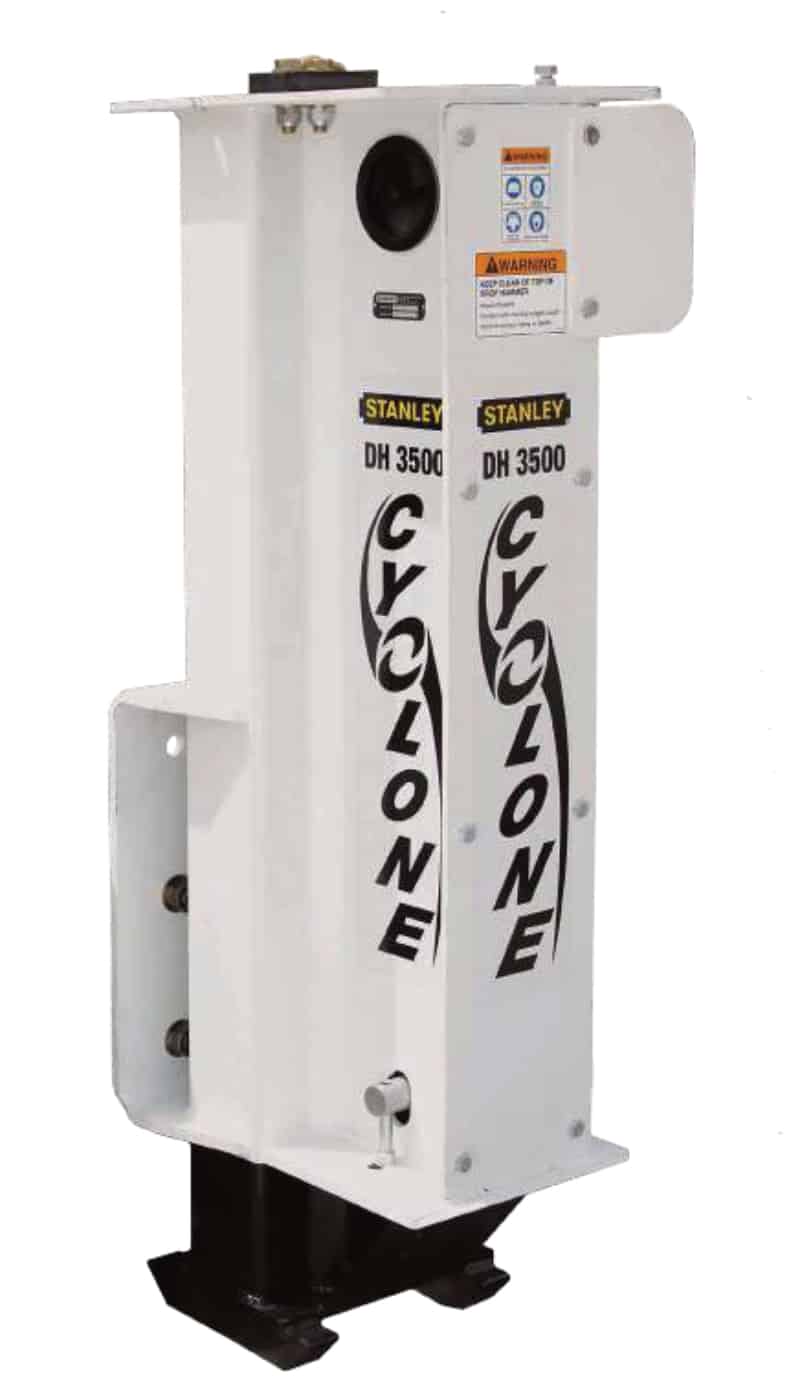







 C20 Rock Splitter